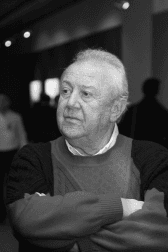
Zurab Tsereteli
1978
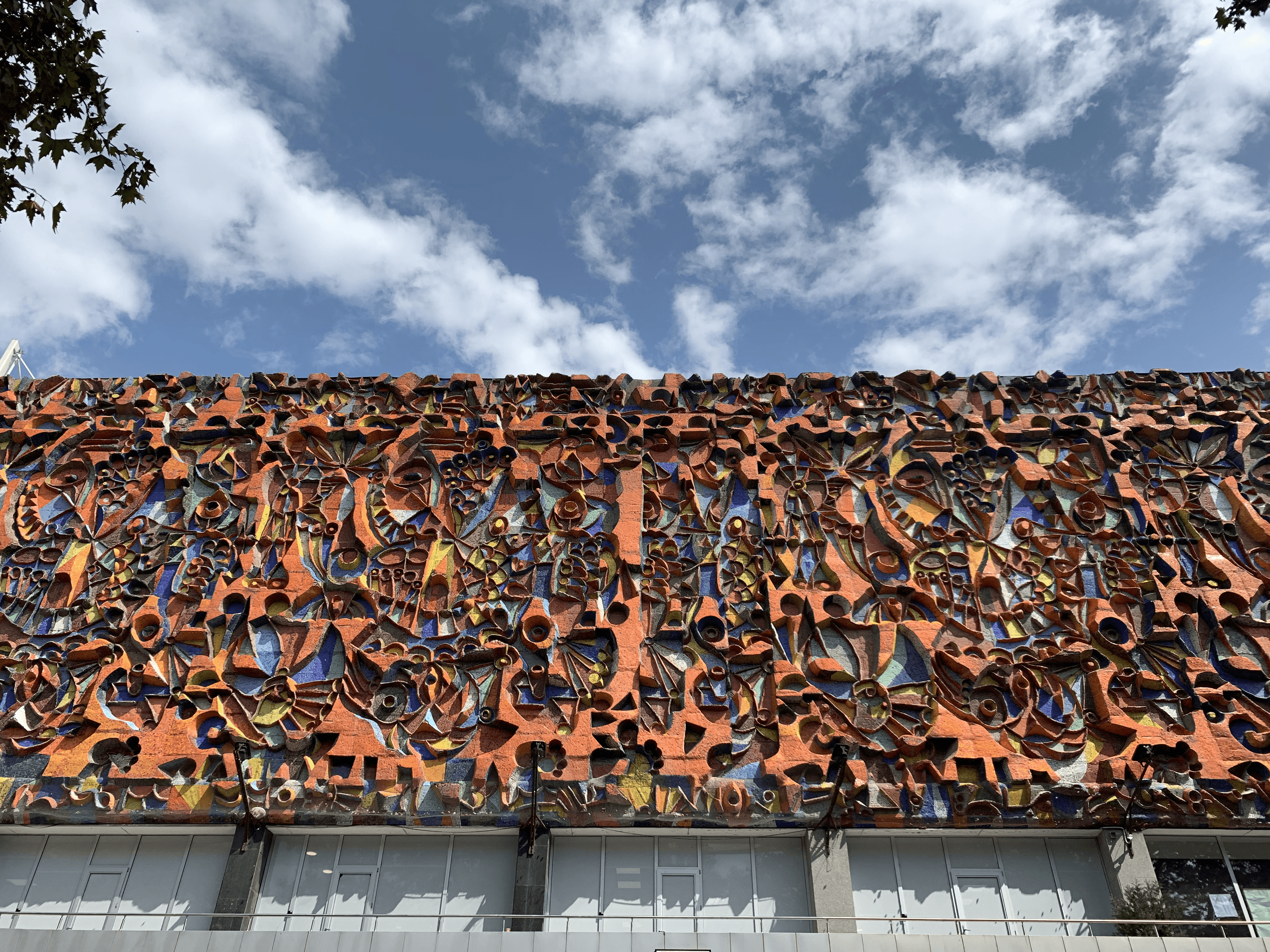
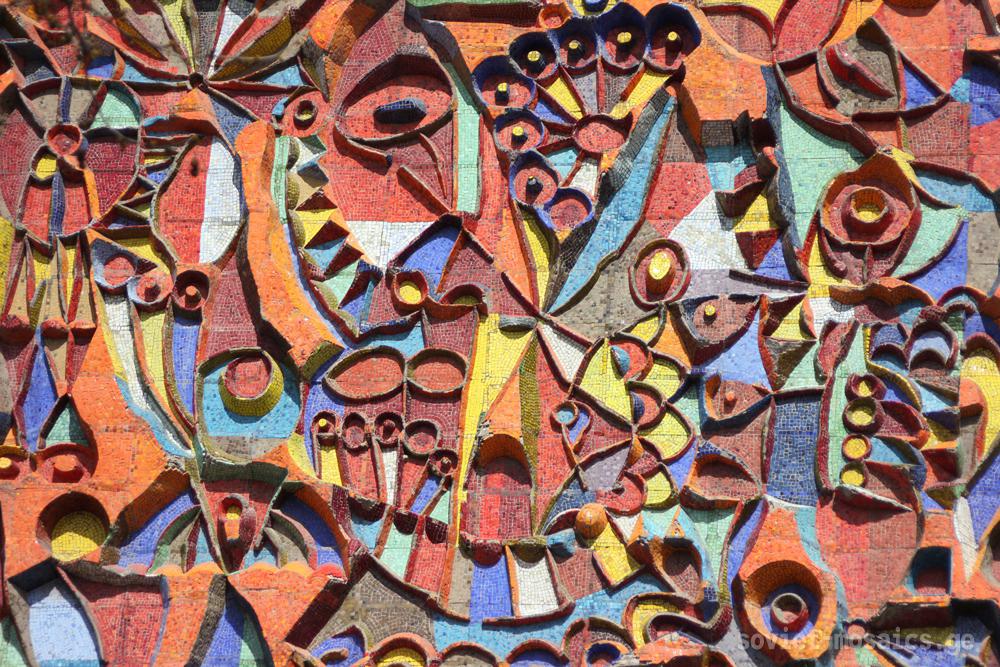
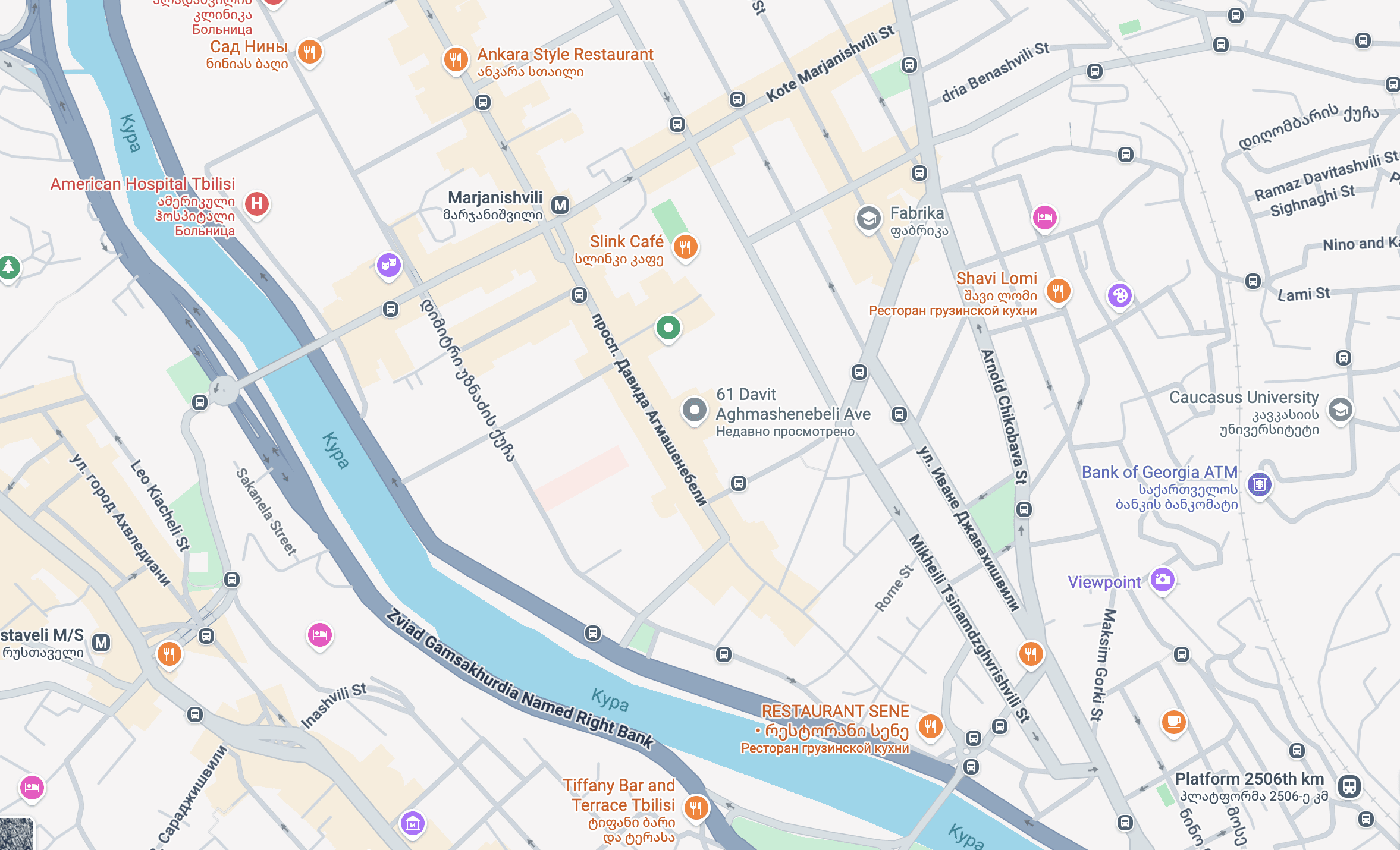
The mosaic facade of the former House of Political Education is one of Zurab Tsereteli's most significant works in Tbilisi — and arguably the most audacious piece of Soviet monumental art in Georgia. The building was constructed between 1978 and 1980 at 61 David Agmashenebeli Avenue. The composition is a bold mix of archaic symbols and complex relief figures, with the three-dimensional surface creating interweaving patterns of light and shadow. Remarkably, the building was erected during the stagnation era, yet Tsereteli managed to defend the project for his abstract, non-representational design even then.
Tbilisi residents responded with a mix of awe and irony, giving the mosaic two affectionate nicknames: "Siroja's Dreams" — named after a character from local jokes — and "fried eggs with tomatoes." 34Travel In Tbilisi, only the most remarkable urban landmarks earn folk nicknames — it is an informal mark of cultural significance. The entire blind wall of the main facade is covered by the relief mosaic panel; the fountains that once stood in front of the building were eventually replaced by a car park.
After the Soviet collapse the building housed various organisations, including foreign embassies, and today it operates as a business centre fittingly named "Mosaic." The mosaic has survived intact and is now regarded as a landmark of Soviet monumental art. It is one of the rare cases where Soviet abstract art not only endured but ended up lending its name to the entire building

About Project
Mosaics of Tbilisi is a visual project exploring the vanishing mosaics scattered across the city. Many of them are slowly razing or disappearing, often without documentation or preservation. Alongside the visuals, the project invites visitors to notice, explore, and reconnect with this fragile layer of Tbilisi’s urban memory
Text me if you have questions or find a mistake